Moving to Serbia: Mission Impossible?

Moving to Serbia and the Cost of Independent Living in Belgrade
Planning a change of address and moving out on your own in the Serbian capital has boiled down to achieving an extremely difficult financial balance. Whether it is someone returning from abroad, a foreigner, or a local leaving their parents' home, moving to Serbia and starting an independent life primarily depends on how much of your monthly income you are willing to allocate for a roof over your head.
In 2026, inflation in the real estate market changed the definition of independent living. Moving out is no longer a standard milestone that follows graduating from college or getting a job—it has evolved into a first-class luxury. To understand why this is the case, we must examine both macroeconomic trends and the everyday real costs of independent living in Belgrade that young people face.
Statistical Gap: Serbia vs. Europe
Serbia currently leads in a socioeconomic category where no one wants to win: the age at which young people leave their parental home. While the average young European packs their bags and leaves their family at age 26, young people in Serbia remain at the same address on average until 31.5 years of age.
This trend is not caused by a lack of personal desire, nor is it rooted in a habit tied to memories. The main culprit is a lack of financial stability. Today, almost every third person in their early thirties still shares an apartment with their parents. When the math doesn't add up, deciding to stay at home is not a personal failure—it is a logical and necessary survival tactic to preserve personal capital.
The Pitfall of Belgrade Rents and Hidden Costs
The biggest obstacle pushing up monthly expenses is the huge mismatch between salary levels and monthly rental prices. Belgrade has officially positioned itself as the most challenging city in the entire Balkan region for independent living. Allocating around 64% of the average net salary just to cover basic rent cannot be called smart budgeting—it is a dangerous financial trap that leaves no room for emergency funds or long-term savings.
Detailed Breakdown of Monthly Bills
An independent tenant trying to secure an apartment must account for several major expenses that go beyond simply paying rent to the landlord:
Basic rent: An ordinary, average studio apartment in a decent residential area (check out available apartments up to €80,000) now costs an average of around €470 per month.
Infostan and utilities: Municipal services, building maintenance, central heating, and electricity consumption add a mandatory €80 to €120 to the monthly pile. To avoid going broke over electricity bills during winter months, be sure to read our step-by-step 2026 Electricity Saving Guide to keep monthly costs in check.
Cable and internet packages: High-speed fiber-optic internet and basic digital TV packages require an additional €25 to €40 per month.
To comfortably rent a standard one-bedroom apartment in the broader city center without living under tight grocery constraints, a tenant needs a net monthly salary of at least €1,600. That figure is almost double the national average wage, which automatically disqualifies a vast portion of young workers.
Hidden Costs: What Nobody Tells You About Day One
On top of regular monthly bills, the capital required just to bring your boxes into a new apartment is quite daunting. Landlords in Belgrade in some cases demand the first month's rent in advance, plus a deposit equal to another month's rent. If you want to learn how rental rules work from a landlord's perspective, check out our guide on How to Rent Out an Apartment in Belgrade.
If you use a real estate agency to find an apartment—which is increasingly common due to overwhelming demand and fake listings—you will also pay a non-refundable agency fee (usually 50% of one month's rent). That means that just to step into a €470 apartment, you need a minimum of €1,175 in cash on day one. When you add moving costs and basic household supplies, the initial financial shock becomes a massive barrier.
Why Moving to Serbia is Financially Challenging for Property Buyers
If paying rent feels like throwing hard-earned money away, trying to buy your own property in the capital feels like an impossible mission. To understand how many working years go into buying living space, take a look at the analysis of how many m² per annual salary you can afford.
The 20% Down Payment Barrier
Scraping together the cash for the mandatory 20% bank down payment is the single biggest hurdle for young buyers. With real estate prices in high-demand neighborhoods holding steady at around €3,000 per square meter (detailed insights are available in our guide about price per square meter(key factors) and the accompanying price per m² data), a standard 50-square-meter apartment carries a total price of €150,000.
This means a buyer needs an astonishing €30,000 in cash just to cross the threshold for loan approval. Before buying, it is recommended to study the VAT Refund Guide to recover part of the funds. For foreign citizens considering a purchase, the rules differ further, about which you can read more in our overview of Housing Loans for Non-Residents.
Banking Restrictions
Commercial banks in Serbia cap monthly loan installments at a maximum of 50% of your official net income. Signing a 30-year mortgage represents a massive financial risk in an unstable regional economy (we recommend reading how Early Loan Repayment works). For the vast majority of young workers at the very start of their careers, these restrictions are currently insurmountable without a direct inheritance or serious financial backing from parents.
Finding Roommates
So how do young people manage to move out at all? They adapt by finding roommates. Historically, sharing an apartment with roommates in Belgrade was a phase reserved exclusively for university students. In 2026, it has become standard operating procedure for IT professionals, designers, and managers in their late twenties and thirties.
By pooling their finances, young professionals prefer renting larger, two-bedroom apartments in prime locations rather than struggling alone in tiny studio units. Sharing expenses allows them to preserve a portion of their income and secure a higher-quality living space.
Conclusion
In today's economy, achieving complete housing independence is no longer the default, natural next step that follows graduation or a first job. It has evolved into a rare financial trophy reserved for a select few.
Until the wide gap between local salaries and market real estate prices begins to narrow safely, staying in the family home is nothing to be ashamed of. It is currently the only mathematically sound financial move while waiting for the real estate market to stabilize.
More from Novi Kvadrat Editorial

High Speed Rail and Property Values: Top Growth Zones
The construction of modern transit hubs, expressways, and high-speed rail lines is fundamentally reshaping real estate market dynamics. Data tracking transit infrastructure confirms that high speed rail and property values move in tandem, converting formerly remote suburban pockets into highly sought-after residential and investment hotspots. Discover which micro-locations experience the steepest capital appreciation and how to invest strategically before infrastructure projects complete.

Micro-Location Real Estate: Why Street Prices Differ
Two apartments on the same street, with identical floor plans and square footage, can vary in price per square meter by up to 30%. Thorough analysis proves that micro-location real estate dynamics dictate this pricing gap. From floor level and traffic noise to sunlight exposure, views, and parking accessibility, hidden micro-environmental factors directly influence daily living comfort and long-term asset liquidity.
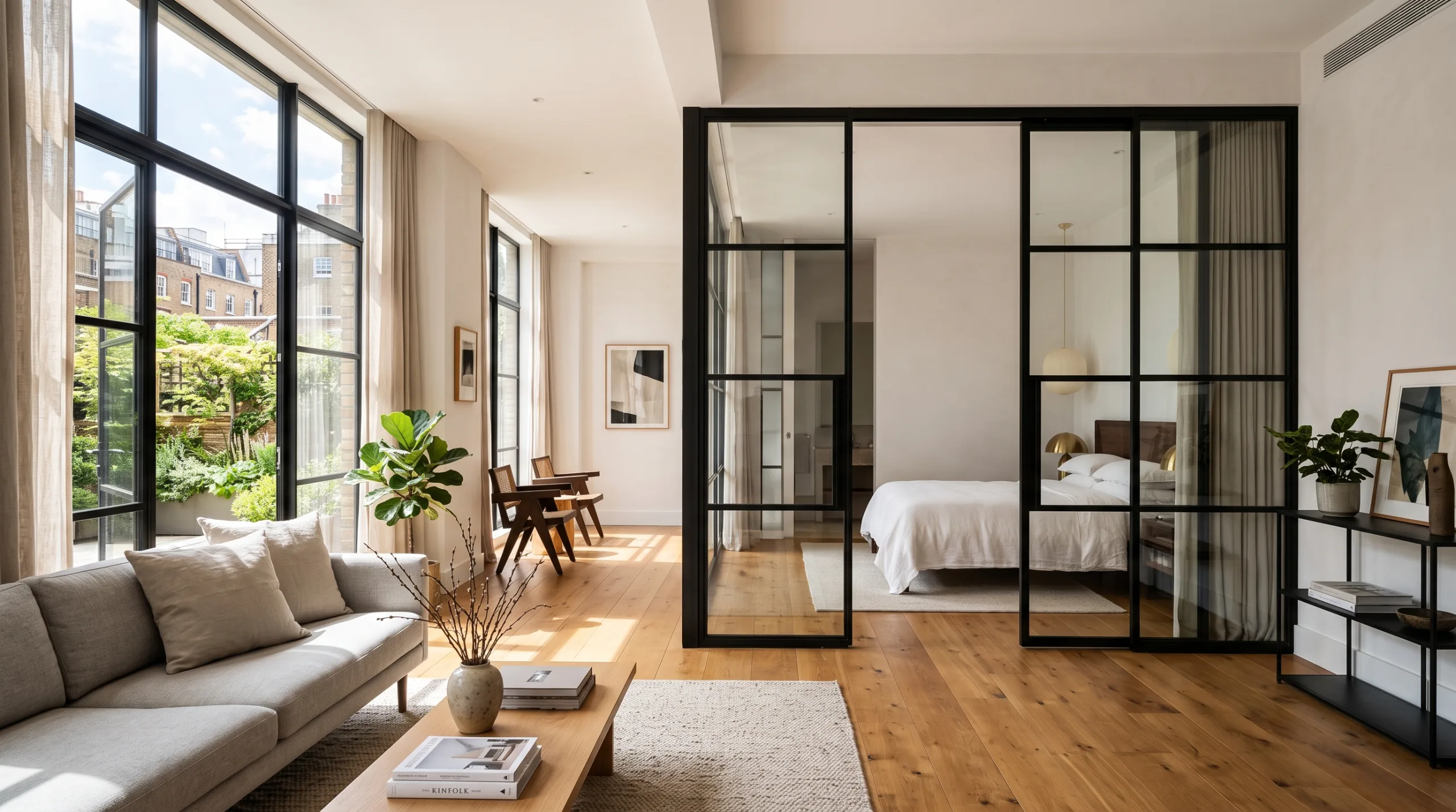
Creating an Additional Room: Smart Layout Guide 2026
A growing family, the need for a home office, or a simple desire for more privacy frequently raises a crucial question: how to gain new space without purchasing a larger property? The solution lies in creating an additional room through smart floor plan organization and minimal investment. From using light glass partitions and multi-purpose furniture to terrace adaptation, we reveal creative methods that will transform your home.