Housing Loans for Non-Residents in Serbia: A Buyer's Guide

Housing Loans for Non-Residents in Serbia: Conditions, Documentation, and Procedure
Buying property is one of the most important life and financial decisions. For many Serbian citizens living and working abroad, as well as for foreign nationals, solving their housing needs or investing in their homeland often relies on banking support. That is why housing loans for non-residents in Serbia have become one of the most sought-after financial options in the regional real estate market, opening the doors to capital coming from outside the country's borders. When reviewing available offers and apartments for sale on the market, securing a financial foundation is the first step toward a successful transaction.
However, since these arrangements are treated as specific foreign credit transactions, the process requires a detailed understanding of domestic laws, foreign exchange regulations, and procedures of the National Bank of Serbia (NBS). Proper preparation is the key to fast and successful financing approval.
Who is Legally Considered a Non-Resident?
Before diving into the loan application process, it is crucial to accurately define your legal status according to the Law on Foreign Exchange Operations of the Republic of Serbia. Financial institutions do not divide clients solely based on passport ownership, but rather on their economic and life center.
In practice, non-resident status covers two main categories:
Serbian citizens in the diaspora: Individuals holding Serbian citizenship who have lived and earned income abroad for more than a year. For many of them, moving to Serbia represents a key financial and life goal.
Foreign nationals: Persons who do not hold Serbian citizenship and have not met the legal conditions to become residents (they do not have permanent residency or a registered domicile in the country).
Understanding this distinction is vital because banks use this status to determine the model through which the loan will be disbursed—either in foreign currency (paid into the non-resident's account) or in RSD (paid directly to the seller's account).
How Location and Technical Features Dictate the Investment
When non-residents buy property through a bank loan, the selection of the property itself undergoes a rigorous evaluation. The bank does not just finance the client; it also finances the property, which serves as the primary collateral (mortgage). In this context, the physical and technical features of the apartment directly influence the decisions of banking risk analysts.
Property Feature | Bank Requirements & Impact on Loan Approval |
Registered properties (1/1 ownership) | A basic prerequisite for most banks; enables quick registration of a first-rank mortgage. |
Early-stage new construction | For modern new developments, financing is possible only if the developer has project financing with the same bank. |
Energy efficiency and systems | Modern properties with an issued occupancy permit pass risk assessments more easily. |
Attractive locations | Locations in high-demand urban zones (such as Belgrade and its central municipalities) guarantee high property liquidity to the bank. |
All these parameters, along with legal security, directly impact the final price per square meter you will pay, as banks rarely approve loans for properties with unregulated legal status or in unattractive locations where property value could drop sharply.
How Banks Assess Housing Loan Conditions for Non-Residents
One of the biggest misconceptions is that banks in Serbia automatically reject clients whose income is earned outside the country's borders. The truth is quite the opposite: domestic banks evaluate the creditworthiness of non-residents in almost the identical way as for residents, albeit with a more rigorous verification of foreign documentation.
The bank's main focus is analyzing your total debt ratio—specifically the ratio between your net monthly income and the future loan installment. To issue a positive decision, the bank is legally required to obtain proof of your regular debt settlement over the past 12 months. Since the domestic Credit Bureau does not hold data on your foreign debts, you will need to provide official reports from the credit registry of the country where you currently live and work.
Required Documentation and Procedural Steps
Applying for a non-resident housing loan requires gathering extensive documentation. Given that documents originate from foreign systems, all papers must be translated into Serbian by a certified court translator.
To successfully initiate the procedure, you will need:
A valid passport and proof of residence/employment status abroad.
An official permanent employment contract and pay slips for the last 6 to 12 months.
Foreign bank account statements confirming regular salary deposits.
Tax returns from the country where you pay income tax.
Title deed (List nepokretnosti) for the apartment you are purchasing, not older than a few days (learn in detail how to check ownership and encumbrances in the cadastre before submitting your loan application).
Once the bank approves the application, you proceed to notarize the purchase contract and the mortgage statement before a public notary. If you are buying your first property in a new development, be sure to read our guide on VAT refunds. If you are unable to be physically present in Serbia during these steps, you can complete the entire procedure through an attorney-in-fact using a special power of attorney notarized at an embassy or by a foreign notary.
Conclusion: Safe Financing with Professional Support
It is clear that housing loans for non-residents in Serbia are an excellent mechanism enabling the diaspora and foreign investors to become owners of valuable real estate without needing the full purchase amount in cash. If you acquire additional capital in the future, it is also useful to know how early loan repayment works.
Hiring licensed real estate experts and specialized lawyers gives you complete legal security and ensures your application is processed quickly, efficiently, and without hidden administrative costs.
More from Novi Kvadrat Editorial

High Speed Rail and Property Values: Top Growth Zones
The construction of modern transit hubs, expressways, and high-speed rail lines is fundamentally reshaping real estate market dynamics. Data tracking transit infrastructure confirms that high speed rail and property values move in tandem, converting formerly remote suburban pockets into highly sought-after residential and investment hotspots. Discover which micro-locations experience the steepest capital appreciation and how to invest strategically before infrastructure projects complete.

Micro-Location Real Estate: Why Street Prices Differ
Two apartments on the same street, with identical floor plans and square footage, can vary in price per square meter by up to 30%. Thorough analysis proves that micro-location real estate dynamics dictate this pricing gap. From floor level and traffic noise to sunlight exposure, views, and parking accessibility, hidden micro-environmental factors directly influence daily living comfort and long-term asset liquidity.
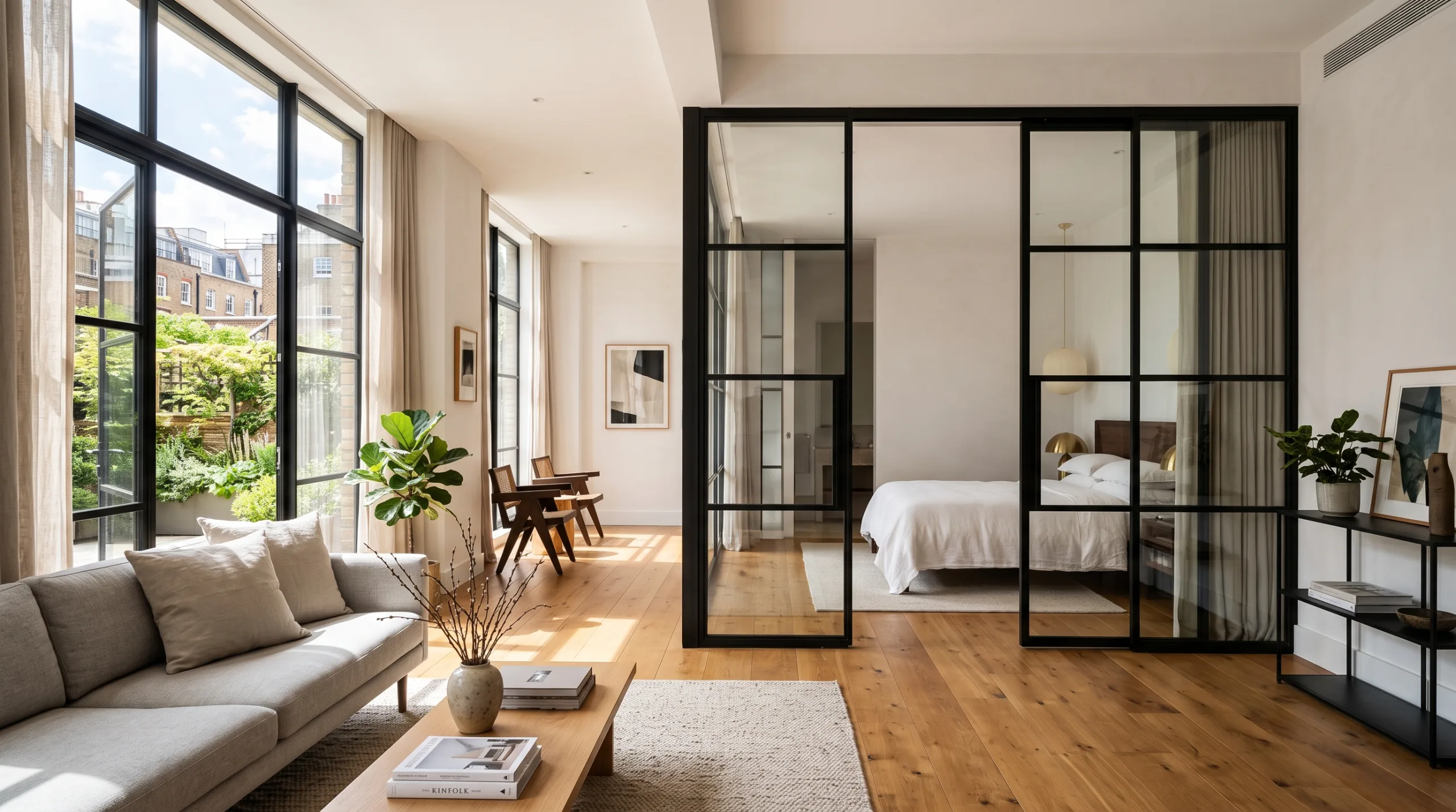
Creating an Additional Room: Smart Layout Guide 2026
A growing family, the need for a home office, or a simple desire for more privacy frequently raises a crucial question: how to gain new space without purchasing a larger property? The solution lies in creating an additional room through smart floor plan organization and minimal investment. From using light glass partitions and multi-purpose furniture to terrace adaptation, we reveal creative methods that will transform your home.